Living & visas
Myths and downsides of living in Thailand: what is true and how to cope
Thailand is described both as paradise and as a land of endless hassle. The truth, as usual, is in the middle: many newcomers' fears do not hold up, and the real downsides are quite manageable if you know about them in advance. We live in Pattaya and gathered the most common myths and honest downsides, with figures and tips for a comfortable life here.

In short
- Myths: food is inexpensive if you know where to shop; a foreigner can buy a condo; you can work legally with a permit.
- Real downsides: year-round heat, visas and insurance as a recurring cost, pricey imported food, the language barrier and construction noise.
- Almost everyone who talks about the downsides keeps living in Thailand: most inconveniences become routine within 1 – 2 years.
Myths that do not hold up
"Thailand is expensive to live in"
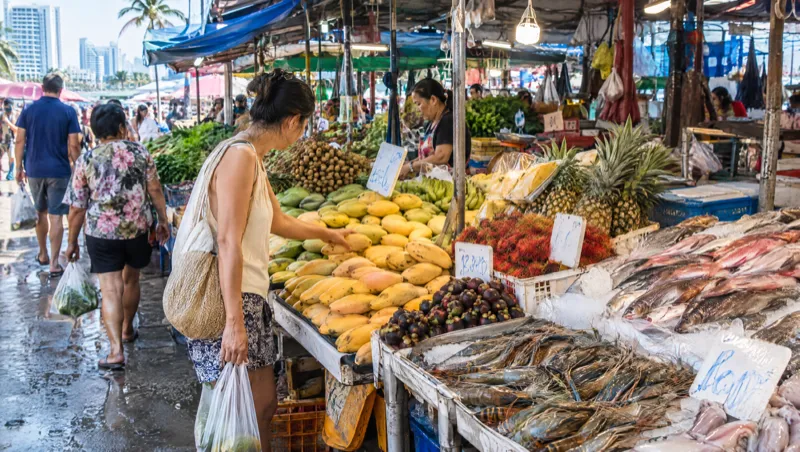
It gets expensive if you buy the foods you are used to at home. Thai staples are cheap: by a Pattaya blogger's count (2025), a monthly basket for two of rice, eggs, oil and chicken comes to about 2,900 ฿. Chicken breast is about 80 ฿ a kilo, lunch at a simple café 80 – 150 ฿. A full budget is in What it costs to live in Pattaya.
"Foreigners cannot buy property"
They can. Under the Condominium Act foreigners own condos freehold within the 49% foreign quota of a building's floor area, if the money comes from abroad. Land is off limits, condos are not. More in The 49/51 quota.
"Foreigners cannot work"
They can, with a work visa and permit: thousands of foreigners work in hotels, schools and large companies. Only a list of occupations is closed, such as guiding, hairdressing and street vending. Remote workers for overseas employers live on the DTV. Details in Working in Thailand.
"Street food will make you sick"
Many people eat at markets for years without problems. A simple rule: choose places where food is cooked in front of you and where locals eat, and buy water and juices sealed.
"Thailand is the same everywhere"
Pattaya, Phuket, Samui and Hua Hin live very differently: some have city life and schools, others quiet and nature. A comparison is in Wintering in Thailand.
Honest downsides and how to cope
Heat and rain
The average daily high in Pattaya per the Thai Meteorological Department ranges from 30 °C in December to 33 °C in April, with 70 – 83% humidity. The wettest months are September and October, the driest December to February.
How to cope: errands and sport in the morning and evening, air conditioning and the pool by day. In the rainy season store clothes with moisture absorbers, leather bags and shoes in closed boxes.
Visas and insurance as recurring costs
Permanent residence is hard to get, so foreigners live on long-term visas and extend them. Add the 90-day address report and a re-entry permit before trips.
How to cope: choose a visa that fits your purpose from the start (retirement, DTV, education, work), set a 90-day reminder and budget for insurance. An overview is in Visas and residence for property buyers.
Imported food and the exchange rate
Thai food is inexpensive, while cheese, sausages, European bread and dairy cost noticeably more than at home. For those earning in roubles the rate matters: per the Bank of Russia, 10 baht cost 28.62 roubles in October 2024 and 23.86 roubles in October 2026, so the baht became noticeably cheaper for rouble incomes.
How to cope: build your diet on local produce and buy imports selectively. Many people make their own cottage cheese and dumplings and shop at Makro and expat stores.
Language
In the EF EPI 2025 ranking Thailand is 116th of 123 countries for English. But in Pattaya's service sector English is almost everywhere, and many places serve Russian-speaking customers.
How to cope: a translator app, a few polite Thai phrases (they are much appreciated), an interpreter for doctors and offices. The tourist police on 1155 answer in English around the clock.
Noise and construction
Pattaya is building actively: a construction site next door here, roadworks there.
How to cope: before buying or renting, check for empty plots and building sites nearby, visit on a weekday, choose windows away from the road.
Dual pricing
National parks charge foreigners more: for example 200 ฿ instead of 40 ฿ for Thais at Khao Yai. It is state policy, as in many Asian countries, not a scam.
How to cope: factor it into trip budgets. At markets, polite bargaining is fine.
Mosquitoes and dengue
The tropics have plenty of insects, and dengue risk rises in the rainy season. Per the Department of Disease Control, 2026 cases are lower than last year.
How to cope: repellent, window screens, no standing water in buckets or plant saucers. With a high fever see a doctor at once, hospitals are covered in Healthcare and insurance in Pattaya.
Tap water
The issue is usually the building's pipes and tanks rather than the water itself, so people do not drink from the tap.
How to cope: drinking water from street vending machines costs about 1 ฿ a litre, and there is bottled delivery and filters.

Settling in
Long-term residents describe a similar path: a few months of delight, then a period of homesickness and everyday hurdles, and after 1 – 2 years a sense of home. Moving does not solve every problem by itself, but it brings a warm climate, the sea and a calm rhythm. The key is to arrive with a clear plan: visa, housing, insurance, school for the children.
Local rules and customs worth knowing are in What not to do in Thailand.
Summary
Most fears about Thailand turn out to be myths, and the real downsides are familiar to everyone who lives here and can be prepared for: choose your visa, area and home wisely, budget for insurance and do not rush to conclusions in the first months.
If you are looking for a home in Pattaya, we will help you choose the area and the condo.
FAQ
Is it expensive to live in Thailand?
Thai groceries and café food are inexpensive; imports, insurance and visas cost more. The budget depends on the area, home and habits.
Can a foreigner buy a condo in Thailand?
Yes, a condo freehold within the 49% foreign quota of a building's floor area, if the money comes from abroad. Land cannot be bought.
What are the main downsides of living in Thailand?
Year-round heat, visas and insurance as recurring costs, pricey imported food, the language barrier and nearby construction.
Can you drink tap water in Thailand?
People usually do not: the issue is often building pipes and tanks. Drinking water comes from vending machines at about 1 ฿ a litre or by delivery.
How long does it take to settle in Thailand?
Long-term residents say a sense of home usually comes after 1 – 2 years.

Sources
- Bank of Russia: official exchange rates
- EF English Proficiency Index 2025: Thailand
- Thai Meteorological Department (TMD): climate normals 1991–2020
- Khao Yai National Park: entry fees
- Thai Department of Disease Control: dengue 2026
This article is for general information and is not legal or tax advice. Laws, fees and project terms change: before a deal we check the current conditions for the specific property.